Oct 18, 2026Buying Guides
How to Vet a Phone Case Manufacturer Before a Private-Label Order
Tooling, material consistency, quality control and export packaging — the checks that separate a supplier who can quote from one who can produce your line.
A supplier who answers your first message with a price and a dispatch date has told you nothing you can verify. The questions that decide whether a private-label phone case programme holds up are about tooling, material control, and what happens the first time a batch comes out wrong.
Why a Fast Quote Is Not Evidence of Capacity
Quoting is a sales task. A trading company with a price list can reply within the hour without ever touching a mould. That is not automatically a problem — the problem is when the reply contains no information about who runs the machine, who owns the tool, or who is accountable when the fit is wrong on the fifth pallet.
Treat the first reply as a sample of how the supplier communicates under low pressure. If the answer to "which models does your tooling cover" is a price, the same gap will appear when you are chasing a correction two weeks before a retail window.
Three Supplier Types, Three Risk Profiles
Factory-direct
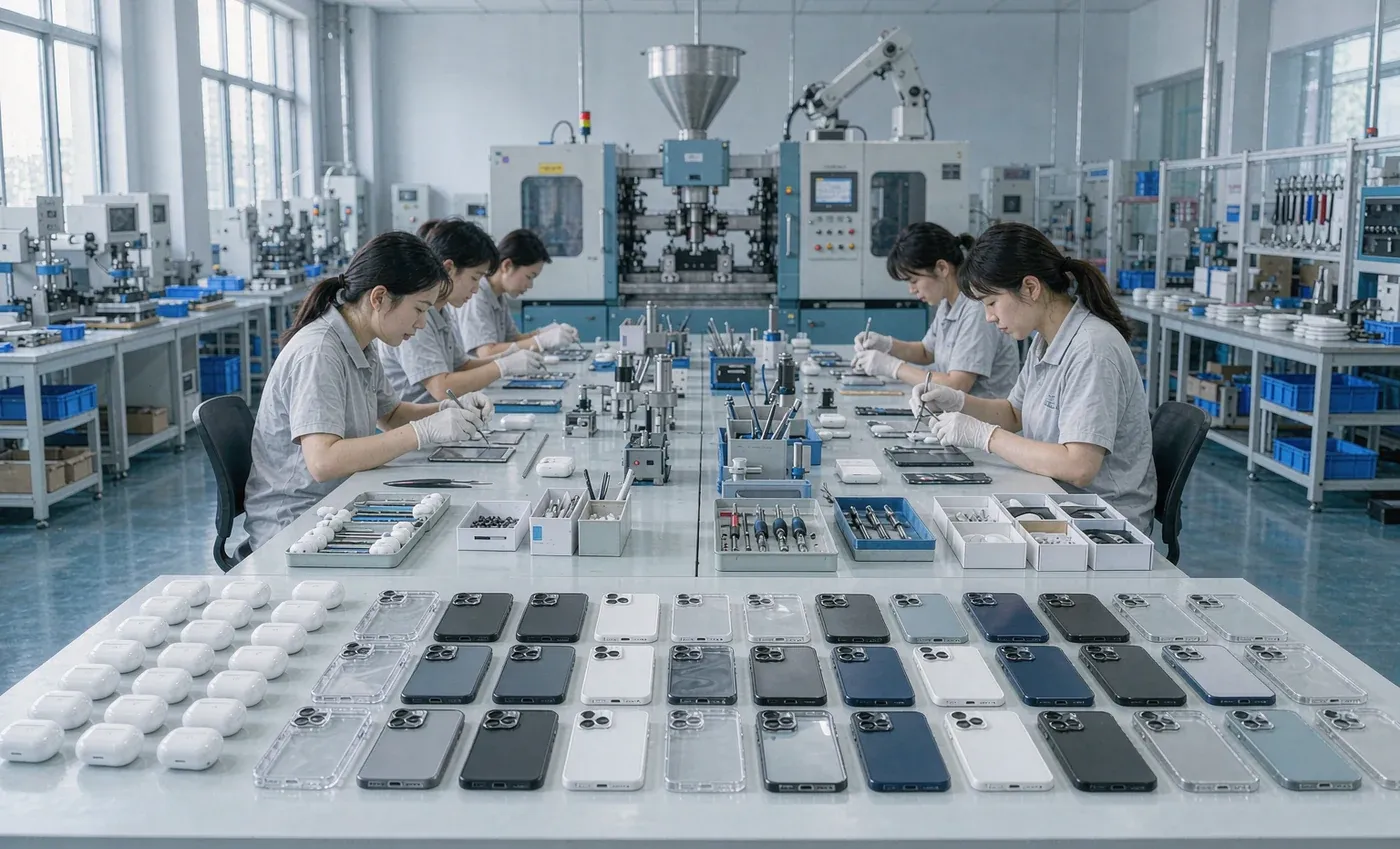
A factory that moulds in-house controls the variables that matter: mould condition, machine settings, material lot and trimming. You get fewer intermediaries, but also fewer people to absorb a mistake. Ask directly which steps are subcontracted — printing, plating, packaging assembly and carton packing are commonly outsourced even by factories that mould their own cases.
Trading company
A trading company aggregates factories and is often stronger on documentation, export paperwork and small mixed orders. The risk is thinner visibility into the production floor. Ask which factory is running your order, whether it is the same one that made your sample, and whether your tool is exclusive to your account.
Platform reseller
Resellers on B2B marketplaces are useful for stock styles and low-commitment trials. They are a poor fit for private label, because the product is defined by the listing rather than by your specification. If you start here, treat the order as a market test and expect to move to a factory relationship once a design is proven.
What to Ask About Tooling and Model Coverage
Tooling is usually the largest fixed cost and the longest lead item in a custom case programme, so it deserves specific questions rather than a general assurance.
Which generations are already covered
Ask for the model list the supplier's existing moulds support, and whether each tool was cut for that device or adapted from a previous generation. A tool cut for the exact device gives you correct camera cut-outs and button travel; an adapted tool is where small misalignments begin.
Who handles a new release
Phone generations arrive on a schedule you do not control. Ask what happens when a new model ships: who initiates the tool, who approves the drawing, and whether the cost is carried by the supplier, shared, or charged per project. A supplier who has done this repeatedly will answer in steps. One who has not will answer in reassurance.
Shared or reserved
A shared mould is cheaper because tooling cost is spread across customers. A reserved mould costs more but keeps your geometry, surface texture and colour standard out of another brand's order. Either can be correct — what matters is that you know which one you are buying, and that it is written down.
Ownership and exit
If you pay for a tool, confirm in writing where it is stored and whether it can be transferred if you change suppliers. A supplier who will not discuss tool ownership is telling you something about the length of the relationship they expect.
Material Consistency: Grade, Finish, Colour Reference
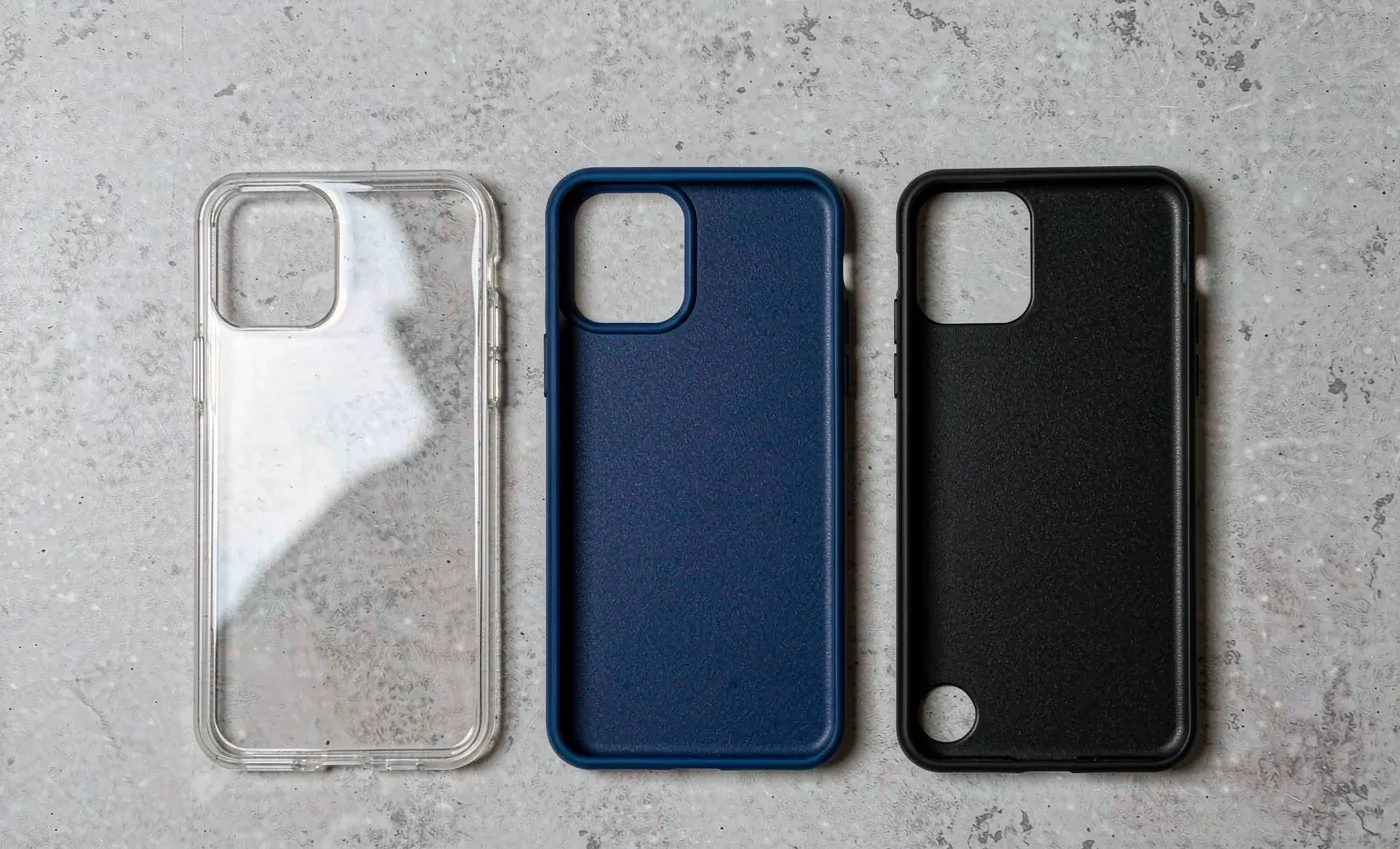
"PC" and "TPU" describe families of material, not a specification. Two cases can both be called polycarbonate and differ in wall thickness, impact grade, surface texture and how cleanly the edge is defined. The three main case materials behave differently on the mould, and that difference shows up in the finished part rather than on the data sheet.
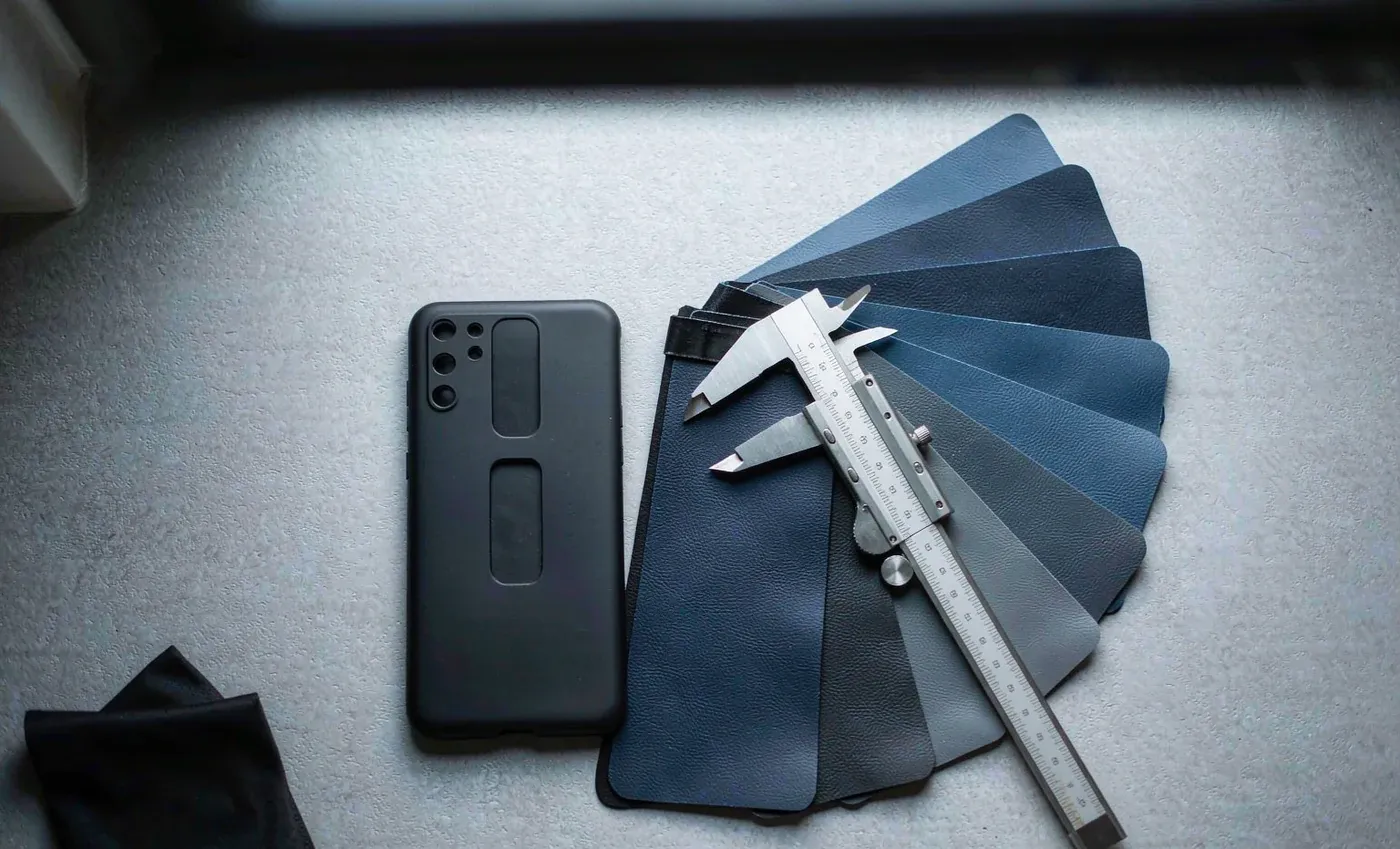
Ask three things. The material grade and who supplies it. The surface finish — glossy, matte, soft-touch coating, or a moulded texture. And whether colour is approved against a physical swatch or against a code, because a code can drift between a screen, a print and a pigment batch.
The most useful sample is not a hand-finished bench sample. It is a part pulled from a production run, on the material and finish you actually ordered.
The Failure Modes Worth Asking About
Every phone case programme has the same short list of things that go wrong. A supplier who can describe their controls for each one is telling you they have been through it before.
Fit too tight or too loose. This starts in the mould dimension and in how the material shrinks. Ask whether the first-off is checked against a physical device or against a drawing.
Flash along the parting line. This starts at the mould parting surface and at trimming. Ask whether trimming is done in-mould or by hand, and whether it is checked across the run rather than on the first few parts.
Print registration drift. This starts where the screen, transfer or in-mould positioning is set. Ask how the first piece of each batch is aligned, and how that setting is recorded.
Colour shift between batches. This starts with the pigment lot and the material lot. Ask whether batch samples are retained, and whether a reorder is matched to the approved swatch.
None of these questions asks a supplier to disclose a customer or a price. They only require that someone on their side knows the answer.
Packaging and Export Paperwork
Retail packaging is a separate development track from the case itself: printed box, insert card, barcode, SKU label and carton mark all need artwork approval. Buyers often raise packaging after the case is signed off, then discover the box needs its own proofing round.
Raise it in the first brief. Confirm whether the supplier prints retail boxes in-house or buys them, whether barcodes and SKU labels are applied at packing, and which export documents they routinely prepare for your destination market. For regulated markets, confirm the applicable documents with your own broker or compliance adviser — that call is yours to make, not the supplier's to guess.
What to Send With Your First Enquiry
A brief that answers these points will remove a round of email from the process: the target model list with generations, the case type and material, the surface finish, a colour reference (physical swatch or Pantone), the packaging format, the destination market, and any logo or pattern artwork in a vector or high-resolution file.
Send the same brief to every supplier you are comparing. Replies become comparable, and evasions become visible.
Questions Buyers Ask When Switching Suppliers
Can we keep our existing mould?
Only if the tool is yours and the new supplier's machine can run it. Both conditions need to be confirmed in writing, and machine tonnage and platen size matter as much as the mould itself.
Do we need a new sample round for a reorder?
A reorder on an unchanged specification should still be compared against the approved sample rather than against a memory of it. If the material lot or the pigment lot changed, treat the first batch as a new approval. The sample checklist is the same list either way.
How do you handle a mixed-model order?
Mixed orders are normal in wholesale, and they are where packing errors happen. Ask how quantities per model and per colour are tracked, how cartons are marked, and whether each model gets its own bag or inner box. The answer tells you more about their operation than any capacity claim.
The supplier worth keeping is the one who answers the awkward questions in writing, before the order exists.
Max Tech moulds phone cases and AirPods cases and supplies phone grips, stands and phone chains for importers, distributors and private-label brands, with OEM and ODM work across material, colour and packaging. Send your model list and target market to start a quote.