Oct 18, 2026Buying Guides
PC, TPU and Silicone: How Phone Case Materials Differ in Production
Rigidity, clarity, print and surface finish — how the three main case materials behave on the mould, and how to match each one to a product line.
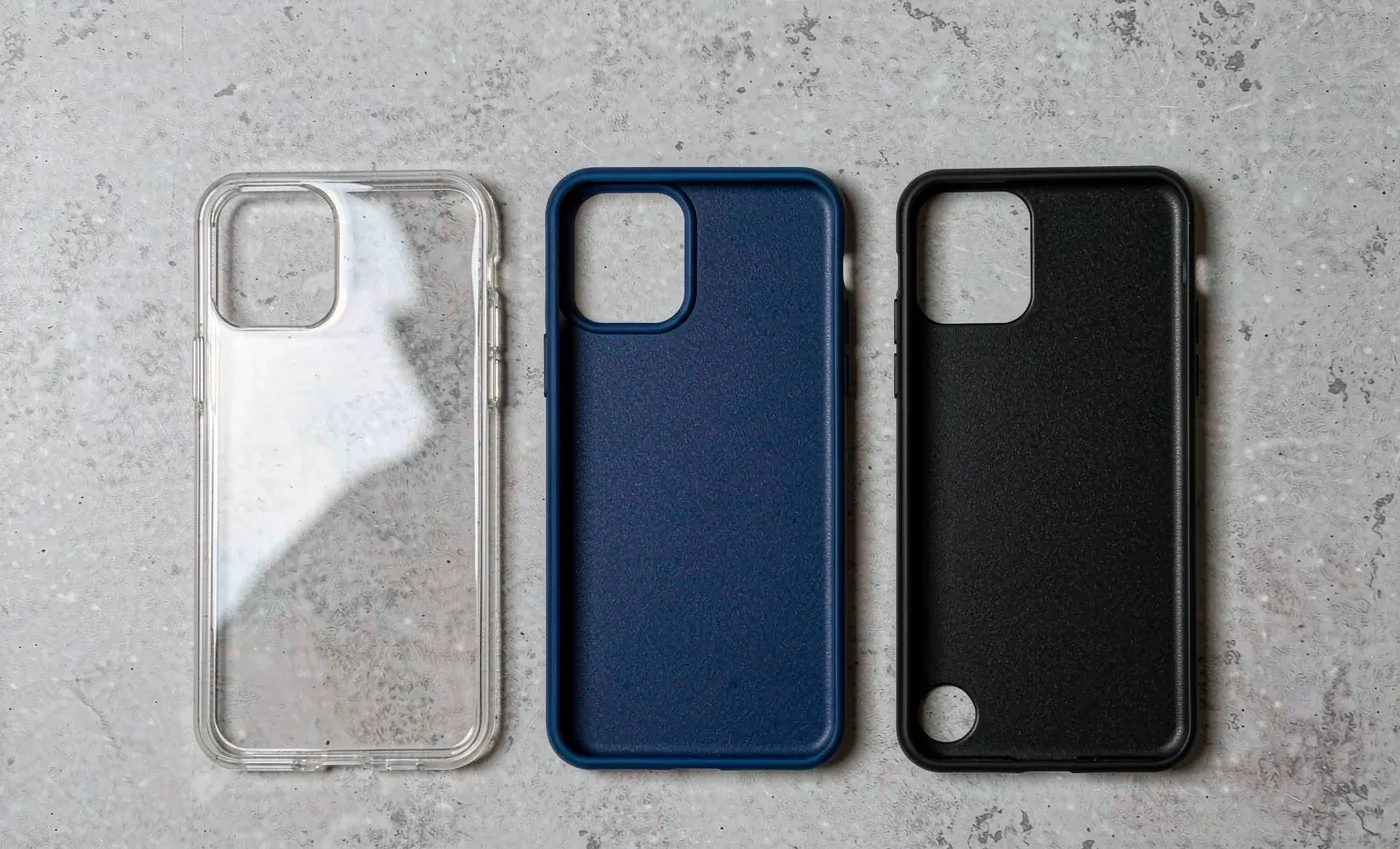
Three material names cover most of the phone case market, and buyers often treat the choice as a matter of taste. In production it is a set of trade-offs: how the part leaves the mould, how print behaves on it, how it feels after a month in a pocket, and what the same colour looks like on each surface.
Start With the Wall, Not the Name
"PC" and "TPU" name a material family. They do not describe wall thickness, impact grade, surface texture or mould quality — and those are what a buyer actually receives. A thin-walled hard case and a thick one can carry the same material name and behave nothing alike.
So the specification sheet matters more than the material headline. Confirm the material family, the grade, the wall thickness, the surface finish and the colour reference before you compare two quotations as if they described the same product.
And the supplier behind it matters more than both, because the same material name can be produced to very different standards.
Polycarbonate: Rigidity, Edge Definition and Print
PC is rigid. It holds a crisp edge, takes a moulded texture cleanly and keeps its shape, which is why it is the usual base for a hard-shell case. Because it is stiff rather than flexible, PC is often paired with a softer frame instead of being used alone on a drop-prone design.
The same rigidity that gives a clean silhouette concentrates stress at thin edges and corners. That is a structural characteristic, not a defect — but it is the reason a PC case needs accurate mould dimensions and a wall thickness that suits the design rather than the thinnest wall the tool can produce.
PC is also the material that makes in-mould decoration practical, and it is the standard carrier for high-definition print, because a flat, stable panel holds registration better than a soft skin does.
TPU: Flex, Clarity and the Yellowing Question
TPU is flexible and returns to shape after an impact, so it is used where the case has to absorb a knock. Soft-shell and transparent cases are typically TPU. It can be embossed for texture, and its clarity makes it the usual choice for a clear case that shows the phone underneath.
Clarity is also where the material's reputation is made or lost. Clear TPU changes with age, light exposure and handling — a well-known limitation of the material family, not of one supplier. The useful question for a buyer is not "will it yellow" but "what formulation and surface treatment are you using, and what does the material look like after accelerated ageing". A supplier who can answer that is working to a specification. One who promises it will never happen is guessing.
Silicone: Touch, Matte Finish and Dust
Silicone gives a soft, matte hand feel and a strong grip, and it hides fingerprints better than a glossy shell. Because the surface is soft it is normally used as an outer skin, often over a rigid frame. It is the material buyers ask for when touch matters more than print.
The trade-offs are surface-related. A soft skin can pick up dust and lint, and it shows handling marks differently from a hard shell. Colour also reads deeper on silicone than on a glossy PC panel, which is why colour approval has to happen on the exact material being ordered rather than on a shared reference chip.
In-Mould Decoration: Why It Belongs on PC
In-mould decoration seals a printed design inside the case wall instead of printing on top of it. The artwork cannot rub away at the edges, and the surface stays smooth to the touch.
The constraint is the process, not the design. IMD suits rigid panels; it does not transfer to a soft silicone skin. Registration is set by the mould, so the artwork file and the tool have to be confirmed together — a pattern that fits one generation's camera cut-out may not clear the next.
Surface Finishes Change the Same Colour
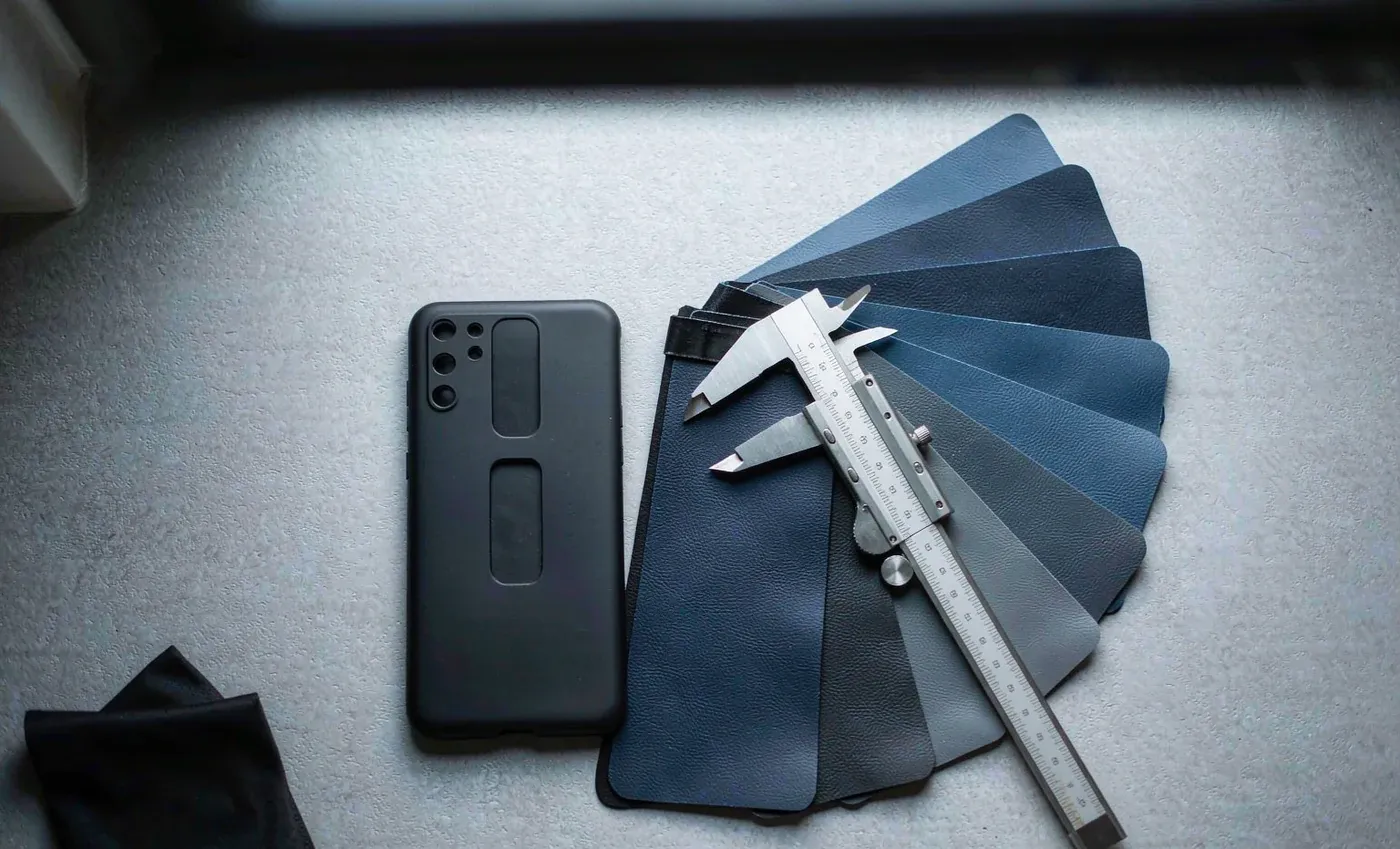
The finish is the part buyers underestimate. The same reference colour behaves differently across gloss, matte, texture and coating, and the difference is large enough to matter at retail.
Glossy. Stronger colour saturation, reflective, and it shows fingerprints. Usual home: clear cases and bright colour stories.
Matte or moulded texture. Slightly lighter colour, a dry hand feel, and better resistance to fingerprints. Usual home: business lines and everyday ranges.
Soft-touch coating. A skin-like feel, with colour reading deeper. Usual home: premium and gift positioning.
Embossed pattern. Raised texture that needs a deeper mould texture. Usual home: AirPods cases and decorative lines.
Plated or metallised. A metallic appearance that masks the base material. Usual home: trim parts and decorative frames.
None of these finishes is better in isolation. The mistake is approving a colour on one finish and producing it on another.
Matching Material to a Product Line
Volume and replacement-led lines
TPU carries the broadest model coverage and the most forgiving tooling economics, which makes it the practical base for a range that has to follow every new generation and reorder often.
Design and print-led lines
PC with in-mould decoration or a hard-shell print gives the cleanest graphic result. This is where a private-label collection earns its premium, and where artwork control matters more than material cost.
Touch-led and gift lines
Silicone, embossed TPU and soft constructions sell on feel. These lines need the tightest colour discipline, because the customer's first judgement is made in the hand rather than on a screen.
A wholesale range usually mixes all three: a rigid printed case for structure and graphics, a TPU case for protection and clarity, and a silicone or soft case for touch. Confirm material and finish SKU by SKU before sampling, because the same approved colour will not read the same across the three.
What to Confirm on the Specification Sheet
Material family and grade. Wall thickness. Surface finish. Colour reference, approved on that finish. Print method, if any. And packaging, because a matte skin in a glossy printed box reads as a different product than the same case in a plain one.
Get those six lines agreed in writing before a sample is cut. It is a short document, and it removes most of the arguments that follow.
Questions Buyers Ask
Is clear PC or clear TPU better for a transparent case?
PC gives a harder, flatter clarity that holds its shape; TPU gives flexibility and impact absorption at the cost of clarity over time. Many clear cases combine the two, and the combination is usually the more durable answer.
Can we print on silicone?
Yes, but the surface needs specific preparation and the result is less sharp than on PC. For detailed artwork, PC or IMD is the better route. For a logo or a simple graphic, silicone print is workable if the sample is approved on the actual material.
Why does the same Pantone reference look different on two cases?
Because the substrate, the finish and the light all change how the eye reads a colour. A matte surface scatters light and reads lighter; a glossy surface reflects it and reads more saturated; silicone absorbs differently from PC. Approve colour per material, in daylight, on the finish you are ordering. That is the sample check most disputes come back to.
Material names set expectations. Wall thickness, finish and colour control decide what the buyer actually receives.
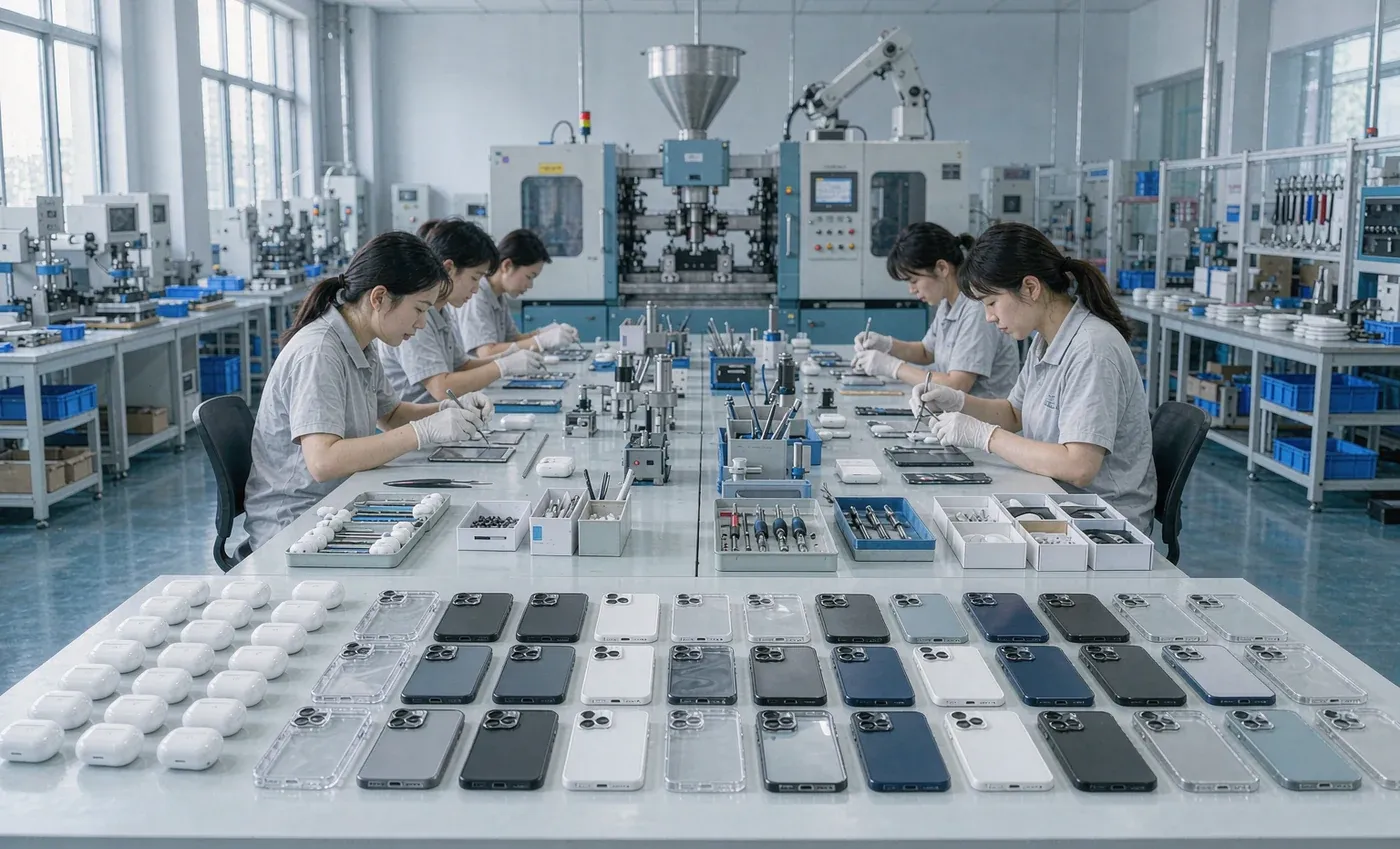
Max Tech moulds PC and silicone phone cases, TPU AirPods cases and moulded accessories for importers, distributors and private-label brands, with OEM and ODM work across material, colour and packaging. Send your model list and target finish to start a quote.